
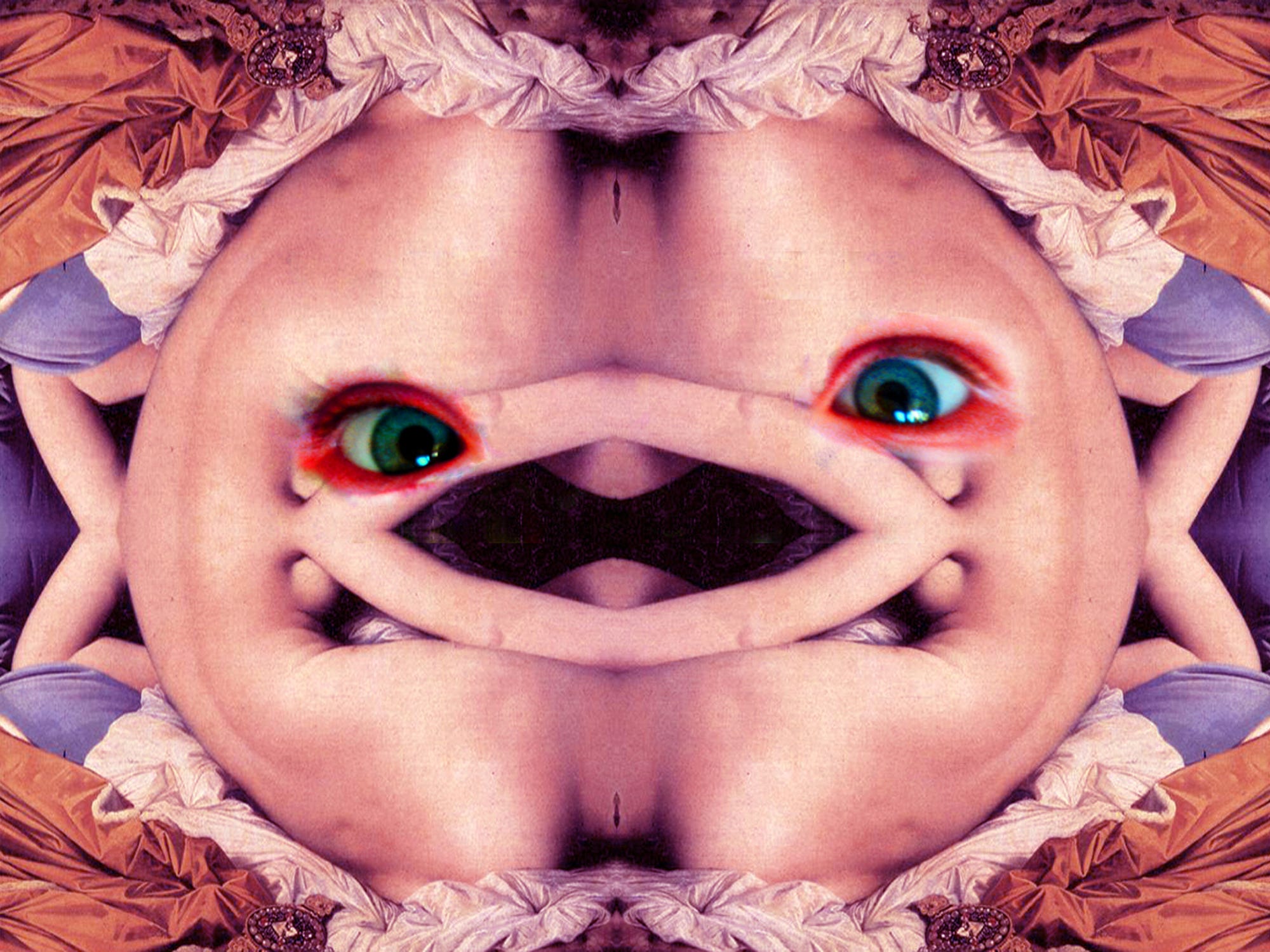
Still from digital Opera Soundage by Majena Mafe
I am a feminist theorist and poet writing on affect theory, visceral grammars, and the blood-edge of language. I’m writing here on The Oracular Other and developing an ear for a placental language theory: by examining how we spoke before the symbolic order, and instead through biochemical negotiation and the umbilical tongue. I name what’s heard/found there LOVE, as soundage - a love that, through the imaginal and the matrixial, acts as a material acoustic ‘becoming’ space of being. Women’s voices, the unsaid/unheard, other oraculars, the monstrous reclaimed, plus more, can all be found and ‘listenened’ for here. Overall, my work is described as research-led poetry. It is transdisciplinary. It is always speculative. It is always a cultural criticism, one that refuses the cut between body and word.
The whole lot.
THE BIGGER CLEARER PICTURE
Navigating My Work: The Umbrella and the Project
To newbies - welcome to The Oracular Other.
To seasoned readers, note a name change… (instead of the ‘other’ oraculars, we now have da da, The Oracular Other.
If you are new to this space, this publication functions as a broad creative and philosophical umbrella. Here, I explore language and consciousness, feminist philosophy and theory, diverse marginalised language frames, avant-garde poetics, and updates from my 40-year (omg) writing and contemporary visual art studio practice as practice-led research (phew). It is a home for experimental text networks and intersectional critique—some language theory, esp feminist and play … and (coming soon) a brand new Umbilicus Toolkit - Glossary.
Nested within this beautiful and broad horizon (think big, I always think) is my highly focused, independent, but related, research project: Placental Language.
How the Two Spaces Connect:
The Oracular Other (This Space): Is your main hub for creative texts, visual essay fragments, and general critiques of how language is used, weaponised, and reclaimed.
The Placental Language Project (My Dedicated Research Hub): This is where I am actively and frantically speculating, making notes and attempting to write my upcoming book manuscript with its own technical glossary. All this in public. It is a strictly focused, linear space for my core theoretical framework exploring the language before disconnection through an access of soundage as love. Exciting stuff.
If you want to read my poetry, art reflections in a generally sharp manner, with broader cultural essays, esp. re thinking and language, stay right here. Your perfectly in the perfect place. If you want to try out my particularly odd but academic fascination-lens, which I will show is highly relevant to us all …track the project and book-in-progress chapter-by-chapter, and engage with my technical glossary, I warmly invite you to subscribe to my dedicated research stream:
Explore The Placental Language Project here.
Thank you for navigating these parallel streams of text and thought with me.
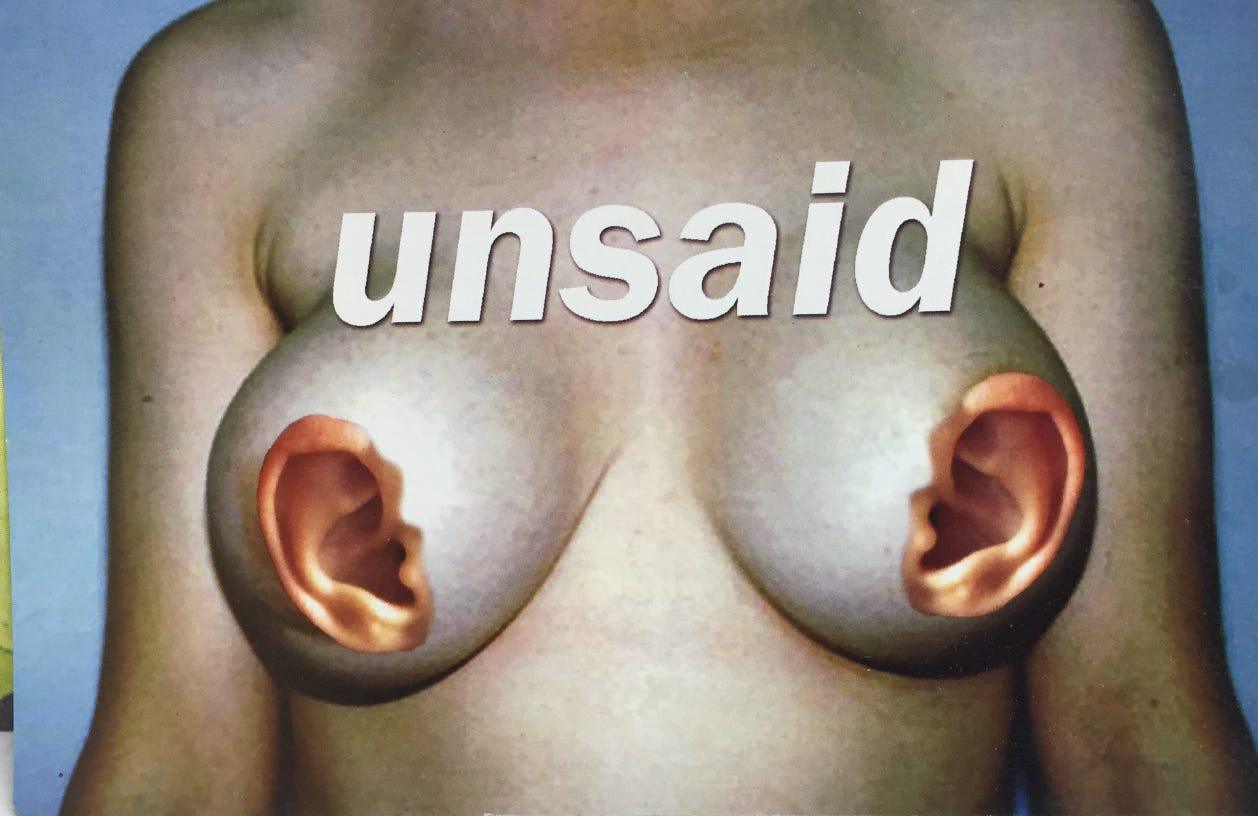
image by majena mafe
WHAT YOU WILL FIND HERE
This here is work at the blood-edge of language, where our bodies meet word, where the unsaid becomes audible, where forgotten tongues resurface, to disrupt common (dumber) frames of thinking.
… and … much of the unsaid. You will find here emerging research and my research questions in the shape of essays, excerpts, notes and quotes I’m working from, ideas and above all voices. This site is full of hybrid writing, juicy thinking and word-hug writing. Detailing the detection and generation of lost, misplaced, muffled and somewhat strangled women’s voices—plus the even more fundamental voices erased by the symbolic order’s founding cut. Their missing words, expressions and experiences. This collection works as a type of lexicon, an imaginative one, a chorus-type oracle of its own making. It deep dives into the echoing chasms of antiquity and finds pairings for listening … in the present. And it dives deeper still—into the biological archive, the placental memory, the umbilical knowledge your body holds. I hope it is an antidote to great loss and all the losses. Re-voicing the almost-lost and remembering what was never supposed to be a voice at all.
BY OTHER NAMES
I have a strong felt (heard) connection with tentacular thinking, speculative feminism, speculative fabulation, jouissance, the new-weird, the mytho-poetic, ficto-critical, sym-poiesis (making with), ecriture feminine, the multi-disciplinary, multi-dimensionality, pattern recognition, entanglement, chthulucene, fuzzy logic, vibrational alignment, sacred randomness, braided entanglement, & an ever-becoming meta-relational paradigm … and the emerging notions of Placental Language and Soundage
So, women’s unacknowledged history, feminist theory, placental language, oracles and spells, some out-there writing … a few rewritten monologues and paraphrased biographies … you will find here resonant research and documentation, a word-hug for lost, misplaced and muffled women’s voices wrapped in a range of my own disjunctive poetics. The site works as a type of lexicon, an imaginative one, a chorus-type oracle of its own generation. It deep dives into the echoing chasms of antiquity and the biological archive, finding pairings for listening in the now. I hope it is an antidote to great loss.
I originally started The Oracular Other, to build and hold a lexicon of things I’d started to both hear missing and to detect and collect things I did hear. I started pulling together speech patterns, quotes, and diagrams I’d made for speech sound, both spoken and unspoken—as ‘other’ oraculars. Increasingly, this led me to problems with language in its allowance and refusal of certain voices, and this led me directly to voices from myth, in particular the pre-Olympians … Gaia, Pythia, Echidna, the Fates, to chaos and to voices/sounds before language frames as we know them, to the refused from speech, oracles, hormonal prophecies, blood-speech. Now it is a growing collection that forms a type of lexicon, thats getting quite big. It has come to include real and mock biographies, testimonies, monologues, quotes and riddles, nonsense and scribbles, stitchery and scores for sound, and much, much more. It is not only text-bound, but contains objects and fleeting wisps of ideas. Images. All research frames, in themselves, are enfolded questions. Most open-ended. Maybe the best. As such, my work is quite comfortable being rooted in both a thickening and a hybridity often called monstrous.
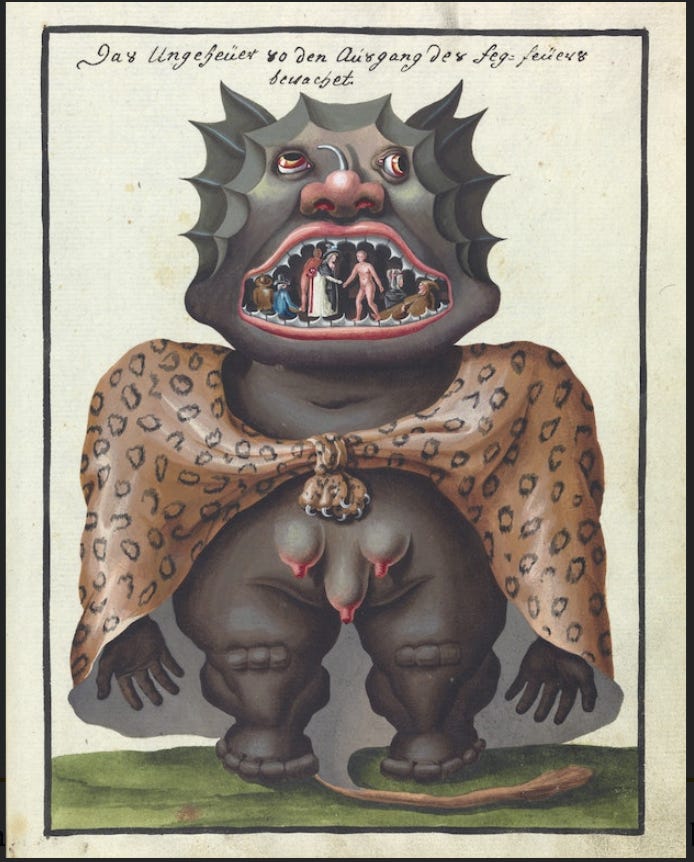
As an example, you will find writings here on the Monstrous. This notion is just one frame that holds particular richness for me as the refused space of being, especially found in images and ideas of maternal-monstrosity and in historical testimonies aligning gestation and birth—with horror. Here I find not horror, but a possible relationship to being/ becoming articulating Grosz’s “generative excess,” not as the placental refusal to be either self or other, or as bodies that won’t stay discrete, or as relation too intimate to be comfortable with. BUT too real to be abjected, to be refused any longer.
My theoretical work grounds my wider research into women’s voices, feminist theory, philosophy, psyche-ology, presenting soundage, generative language in the matrixial and the imaginal. I listen for the unsaid/unheard. I recover oracular wisdoms suppressed by patriarchal culture. And I re-animate ‘other’ oraculars, sibylline oracles, and monologues both sounded and unsound. Prompting you to listen for the lost said and the unsaid found. In this I research women’s voices and unacknowledged knowledge: the particular, la petite histoire, the wisdom of the Oracle, delivered as it is—a form of transmission from a linguistic auditory dimension, to be heard anew. I recover suppressed ways of knowing: knowledge encoded in lost voices, embroidery patterns, herbal wisdom, domestic practices—knowledge that circulates through women’s mutterings and shouts, in their hands, hearts, and the subtle intergenerational transmission.
My research work takes the form some call poetry, or ficto-critical theory or feminist poetics, studying as it does the outskirts of language—and now, the body’s language before outskirts existed, before centres were claimed, before the cut created margins. Given that it is neither strait nor straight, the collection’s pieces shift genres, likening their re-tellings to a cross between a free-verse-ballad-limerick sort of thingy—a bit ode-ish, but heavy on the sound, often self-reflective, sometimes a bit nasty, always with a nod to the more found in the lack.
My attention is always to the cultural and historical withdrawal of hearing and the resulting refusal of sound as forms of knowledge and wisdoms ‘sounding out’ in their own right. But I go deeper—to the withdrawal of the body’s first hearing, the erasure of umbilical tongue, the abjection of placental communication that structures how we think, speak, and relate.
…
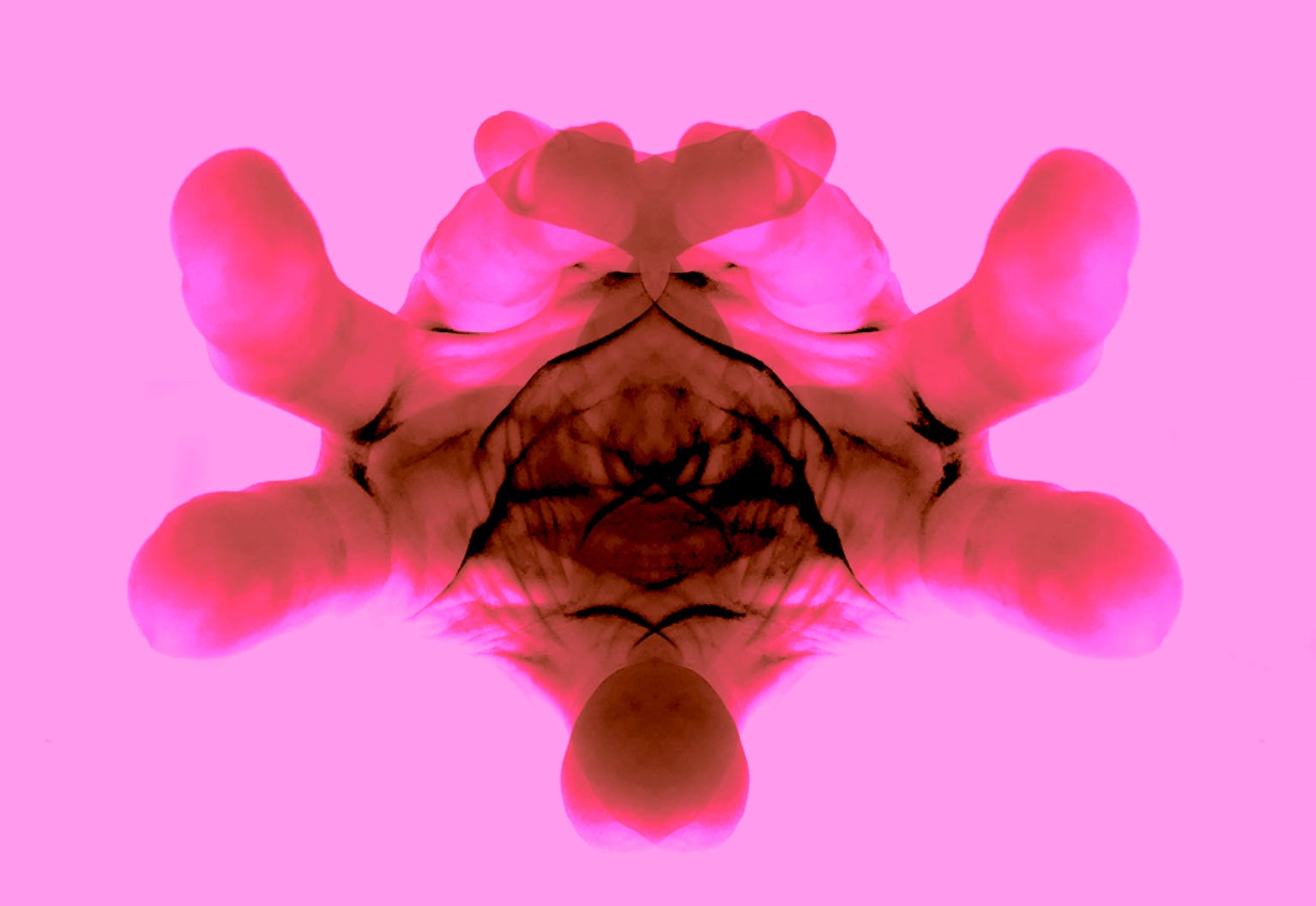
A lot is unheard, is missing … so I veer towards Wittig’s advice … to invent.
You will find a lot here about remembering and remembrances, using disjunctive language frames.
… and in inventing, there is a lot of pulling the threads apart …
I have no linear direction in mind; I think in fields rather than paths, more an openness to a thickening. This is just another thread thickening, but it’s juicy.
#otheroraculars #placentallanguage
Thanks for reading. Keep listening.
… remember, once you spoke another tongue.
Thanks for reading The Oracular Other
Subscribe for free to receive new posts and support my work.
